環境資訊中心外電;姜唯 翻譯;林大利 審校;稿源:ENS 編按:武漢肺炎讓全球經濟大停擺,全球海洋卻無法趁此歇一口氣。無法正常執勤的觀察員、巡邏員,導致非法捕撈頻傳,也使得相關調查推遲甚至放棄;河流的污染未因疫情而減少,持續排放到海洋導致藻類大增生。今年世界海洋日的主題定為「創意打造永續海洋」,希望能儘速減緩海洋問題的滋生與惡化。
2020年世界海洋日的主題是「創意打造永續海洋」,但在輪到海洋健康被關注的這天,全世界卻因武漢肺炎分了心。
美國非營利組織「Oceana」執行長夏普萊斯(Andy Sharpless)這天在他的指出,海洋和捕撈活動嚴重受到武漢肺炎影響,根據Oceana合作成立的全球漁業觀察組織(Global Fishing Watch, GFW),截至4月為止,全球商業捕撈活動下降了6.5%,歐盟等捕撈大國每週捕撈活動急劇減少50%以上。
 疫情使得全球商業捕撈活動下降。圖片來源: (CC BY 2.0)
商業捕撈因疫情大幅下降 非法捕撈仍蓬勃發展
GFW和聯合國糧食及農業組織(FAO),均評估了武漢肺炎對漁業和水產養殖業的影響,並發現小型漁民可能是漁業界受創最重的族群。夏普萊斯說,由於世界各地的魚市場關閉,小型和手工捕魚者的漁獲無處可售。
儘管如此,全球每年數十億美元的非法捕魚卻仍在進行中,甚至在大流行期間蓬勃發展。
FAO表示,在漁業社區中擔任監控角色的受訪者中,有87%的人認為武漢肺炎不利打擊非法、未報告和未管制(IUU)漁業活動。
現在,武漢肺炎導致缺少執法和觀察員,非法捕撈活動正在增加中,尤其是在菲律賓,封城減少了巡邏活動,衛星資料顯示從事IUU的漁民進入禁漁區捕魚。
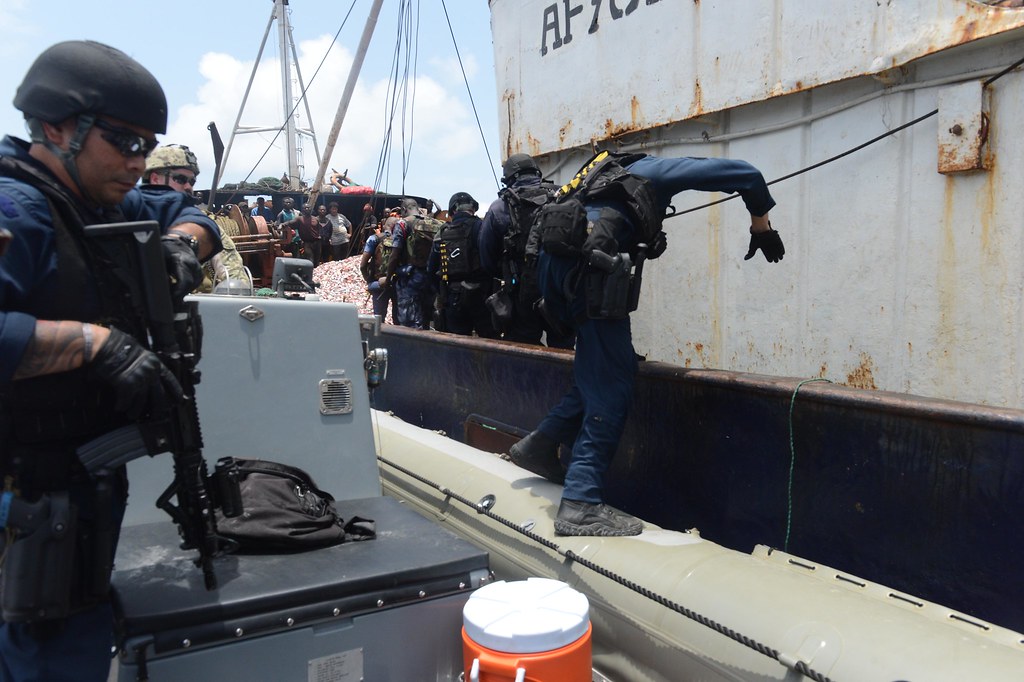 美國海岸警衛隊執法分隊登上一艘涉嫌非法作業的漁船。圖片來源: (CC BY-ND 2.0)
以躲避海浪之名 行非法捕撈之實
菲律賓Oceana成立了一個叫做「卡拉加丹巡邏隊(Karagatan Patrol)」的組織,讓公民與執法部門合作舉報的非法捕魚活動,並透過可見紅外線成像輻射計系統VIIRS追蹤船隻。該系統以衛星資料為基礎,可偵測商用漁船使用的高亮度集魚燈。
5月時,卡拉加丹巡邏隊觀察到,市政水域內非法航行的船隻一週間增加了154%。
Oceana副總裁、菲律賓辦事處負責人拉莫斯(Gloria Estenzo Ramos)表示:「商業捕魚者被抓到進入市政水域時,會以躲避海浪為藉口。實際上它們是在重要海洋棲地和海灣捕魚,這會破壞幼魚的產卵場。但是,今年武漢肺炎帶來空前的挑戰,需要適應、建立有彈性的系統,以及國際合作。
被迫延遲放棄的調查評估 恐影響未來決策
根據亞洲開發銀行的資料,全球十大漁業中有六個位於亞洲,分別是中國、印尼、印度、日本、越南和菲律賓,亞太地區有3,400萬人從事商業捕撈。
亞洲開發銀行2019年的健康海洋計畫中指出,亞洲海洋生態系統「已被推向崩潰的邊緣。半數珊瑚礁消失了,魚類族群和海洋物種正在減少,海洋變得越來越熱,酸性越來越強,海平面不斷上升。如果魚類族群繼續惡化下去,依靠漁業謀生的數百萬人口可能面臨災難性後果。」
武漢肺炎讓世界各地的研究、評估和觀察報告被迫延遲或直接放棄。
在阿拉斯加,美國國家海洋與大氣管理局(NOAA)已正式取消本季幾乎所有魚類調查。資料缺失影響魚類豐度估計、族群評估和配額。根據不完整資料做出的漁業管理決策效果不佳,並且可能影響未來幾年的海洋豐度。
窒息的沿岸生態 墨西哥灣「死區」耗盡海中氧氣
NOAA科學家根據美國地質調查局的河流流量和養分資料預測,今年夏天,墨西哥灣的低氧區域或致死的無氧「死區」預測將為6,700平方英里(約1,735公頃),大於長期平均面積5,387平方英里(約1,395公頃),但低於2017年創下的8,776平方英里(2,272公頃)記錄。
每年夏季出現的墨西哥灣死區,是密西西比河流域人類活動產生過量養分污染造成的。多餘的營養物進入海灣,會刺激藻類過度增生,當藻類死亡並分解並沉入海底時就耗盡海中氧氣。
在海灣底部附近產生的低氧區域使許多海洋生物無法生存。魚、蝦和螃蟹可以離開該區域,但無法移動的動物會因低氧而受到壓力或死亡。
 死區形成原因:(1)春天時,溫度較高的淡水從密西西比河流入墨西哥海灣,形成了一個屏障,阻隔下方海水進行氧氣交換。(2)從肥料和污水中而來的氮、磷營養鹽促成了大量藻類生長,等藻類死亡後,屍體會沉降到下方的海水被細菌分解,這個過程會消耗許多氧氣。(3)下方海水的氧氣濃度越來越低又無法進行氧氣交換,死區就此形成。 圖片來源:Nola.com(image Credit: Dan Swenson )
NOAA國家海洋局代理主任勒博夫(Nicole LeBoeuf)表示:「死區不僅傷害海洋生物,也損害商業和休閒漁業以及賴以為生的社區。每年死區造成大範圍海域無法供物種生存,對該區生物資源和沿海經濟造成壓力。」
公海海洋保護區MPA 聯合國排定今年完成談判
不僅沿海地區受海洋變化的影響,公海也難以倖免。
皮尤慈善信託基金會(Pew Charitable Trusts)成員桑多瓦爾(Luis Javier Sandoval)指出:「廣大的公海距海岸線200海里(約1,111公里),佔海洋的近2/3。這些水域不像近海生態系統那麼受到矚目,但它們必須被注意。公海充滿了生命,支持重要而獨特的生態系統。但是現在,所有公海生態受到人類活動和氣候變遷的日益嚴重的威脅,包括海洋暖化和酸化。」
「越來越多科學機構同意,海洋保護區(Marine protected areas, MPA)是保護和復育海洋健康的最有效工具之一,但是在當前的海洋管理體系下,大部分公海無法建立全面的MPA。」
一項關於公海海洋生物多樣性、實現公海MPA的聯合國條約將有機會解決這個問題。針對這項條約的聯合國談判排定於今年完成。
 綠色和平組織在菲律賓阿波島舉起標語,該海洋保護區(MPA)在2012年颱風摧毀。極端氣候事件的增加是氣候變遷的影響之一。圖片來源:Greenpeace
隨著海洋變得越來越酸,海洋生物多樣性和食物鏈受威脅,塑膠污染無處不在,聯合國將「創意打造永續海洋」選為今年世界海洋日的主題。
了解海洋是保護魚類資源和發現新產品、新藥物的基礎。聯合國秘書長古特雷斯說,海洋科學永續發展十年(2021-2030)即將到來,提供動力和共同的行動基礎。他呼籲各國政府和相關各界致力於創新和科學,以保護世界海洋。」
Coronavirus Concerns Shape World Oceans Day 2020 NEW YORK, New York, June 8, 2020 (ENS)
The World Oceans Day Theme for 2020 is “Innovation for a Sustainable Ocean,” but the coronavirus pandemic is top-of-mind today as the world focuses on the health of the oceans.
“Oceans and fishing have been dramatically impacted by the coronavirus pandemic,” Andy Sharpless blogged today to mark World Oceans Day 2020. The CEO of the U.S. nonprofit group Oceana, Sharpless offers new data from Global Fishing Watch, an organization that Oceana co-founded, showing that global commercial fishing activity through April was down 6.5 percent.
“Large-scale fishing nations, like those in the European Union, experienced a dramatic reduction in weekly fishing activity of 50 percent or more,” he said.
Both GFW and the UN Food and Agriculture Organization, FAO, assessed the impact of COVID-19 on fisheries and aquaculture and found small-scale fishers have likely been some of the hardest hit in the fishing community.
With fish markets closed around the world, small-scale and artisanal fishers have nowhere to sell their catch, Sharpless explained.
Still, the global, multi-billion-dollar-a-year illicit fishing industry persists and has even been thriving during the pandemic.
FAO says 87 percent of those surveyed in the fishing community with roles in monitoring, control, and surveillance report that the impact of COVID-19 is having, or is expected to have negative consequences on the fight against illegal, unreported, and unregulated (IUU) fishing.
Now, due to a lack of enforcement and observer coverage because of the coronavirus, illegal fishing is on the rise, especially in the Philippines, where the reduced patrols due to the coronavirus lockdown gave IUU fishers an opening to harvest areas usually closed to them, satellite tracking data indicate.
Oceana Philippines created a group called Karagatan Patrol, a platform for citizens to report illegal fishing in municipal waters in coordination with law enforcement. Karagatan Patrol tracks ships through the visible infrared imaging radiometer suite, VIIRS, a satellite-based tool that detects the high-radiance lure lights used by commercial fishing vessels.
In a single week in May, the Karagatan Patrol reported a 154 percent increase of boats operating illegally in Philippine municipal waters.
“The excuse of commercial fishing operators found plying on the municipal water is that they are hiding from high waves,” Gloria Estenzo Ramos, Oceana vice president and head of its Philippines office, told the news outlet Mongabay. “In reality, they go fishing in bays and gulfs that are critical marine habitats that will destroy spawning grounds of young fishes.”
“This year, however, the unprecedented challenges with COVID-19 have demonstrated the need to adapt, build resilient systems, and, above all, cooperate internationally.
Six out of the 10 largest fisheries in the world are in Asia – China, Indonesia, India, Japan, Vietnam, and the Philippines – and 34 million people in the Asia-Pacific region are engaged in commercial fishing, according to the Asian Development Bank.
But the region’s ocean ecosystems “have been pushed to the brink of collapse,” the Bank says in its 2019 plan for healthy oceans. “Half of all coral reefs have disappeared, fish stocks and marine species are in decline, the ocean is getting warmer and more acidic, and sea levels are rising. If fish stocks continue to deteriorate as predicted, the implications could be catastrophic for millions of people who depend on fisheries for food and livelihood to survive,” the Bank warned.
There are also consequences around the world that flow from the fact that research, assessments, and observer coverage is being delayed or abandoned because of the pandemic.
In Alaska, the U.S. National Oceanic and Atmospheric Administration, NOAA, has officially canceled nearly all their fish surveys this season. This loss of data causes a ripple effect on estimates of fish abundance, stock assessments, and quotas. Fisheries management decisions made on incomplete data are less effective and can impact ocean abundance for years to come.
NOAA scientists are forecasting this summer’s Gulf of Mexico hypoxic area or “dead zone,” an area of low to no oxygen that can kill fish and other marine life, to be roughly 6,700 square miles, larger than the long-term average measured size of 5,387 square miles but less than the record of 8,776 square miles set in 2017. The annual prediction is based on U.S. Geological Survey river-flow and nutrient data.
The annual summer Gulf of Mexico dead zone is caused by excess nutrient pollution from human activities throughout the Mississippi River watershed. When the excess nutrients reach the Gulf, they stimulate an overgrowth of algae, which die and decompose, depleting oxygen as they sink to the bottom.
The resulting low oxygen levels near the bottom of the Gulf cannot support most marine life. Fish, shrimp and crabs often swim out of the area, but animals that are unable to swim or move away are stressed or killed by the low oxygen.
“Not only does the dead zone hurt marine life, but it also harms commercial and recreational fisheries and the communities they support,” said Nicole LeBoeuf, acting director of NOAA’s National Ocean Service. “The annual dead zone makes large areas unavailable for species that depend on them for their survival and places continued strain on the region’s living resources and coastal economies.”
It’s not only coastal communities that are suffering the effects of the changing oceans – suffering continues on the high seas.
Luis Javier Sandoval of the Pew Charitable Trusts wrote in March, “The high seas are distant and vast, starting 200 nautical miles from the shoreline and making up nearly two-thirds of the ocean. These waters don’t get the attention of closer-to-shore ecosystems, but they should. The high seas are teeming with life and support important and unique ecosystems. Now, however, all of that is under increasing threat from human activities and climate change, which is making the ocean warmer and more acidic.”
“Marine protected areas, MPAs, are among the most effective tools for conserving and restoring ocean health, according to a growing body of science, but under the current system of ocean management, there is no way to establish comprehensive MPAs for most parts of the high seas,” Sandoval writes on the Pew Trusts website.
A United Nations treaty on marine biological diversity of areas beyond national jurisdiction aims to address this gap by enabling, among other things, the creation of high seas MPAs. UN negotiations on that agreement are scheduled to conclude this year.
Moreover, as the oceans are becoming increasingly acidic, marine biodiversity and essential food chains are increasingly being jeopardized. And plastic pollution has become ubiquitous.
Against this backdrop, Innovation for a Sustainable Ocean has been chosen as this year’s theme for World Oceans Day.
Better understanding of the oceans is essential for conserving fish stocks and discovering new products and medicines.
“The upcoming United Nations Decade of Ocean Science for Sustainable Development will provide impetus and a common framework for action,” the UN chief said, urging governments and all concerned to commit innovation and science to conserve and sustain the world’s oceans.
※ 全文及圖片詳見:
作者
如果有一件事是重要的,如果能為孩子實現一個願望,那就是人類與大自然和諧共存。
於特有生物研究保育中心服務,小鳥和棲地是主要的研究對象。是龜毛的讀者,認為龜毛是探索世界的美德。
延伸閱讀
【其他文章推薦】
※廢氣洗滌塔,叫得動, 找得到的專業廠商
※市面十大品牌封口機!該如何選購?
※塑膠射出成型加工商品有哪些?
※貨梯使用安全與保養
※掌握產品行銷策略,帶你認識商品包裝設計基本要素
※臭氧機推薦